Precision Cancer Cell Targeting with ADCs and Celltrion’s Next-Generation Oncology Therapies
2026.09.01
Advances in modern medicine are ushering in a new era of precision medicine, where treatments are designed to selectively target cancer cells and maximize therapeutic efficacy.
At the forefront of this shift are antibody-drug conjugates (ADCs). ADCs represent a next-generation therapeutic technology that combines antibodies that specifically bind to cancer cells with potent cytotoxic agents, enabling the targeted destruction of cancer cells while minimizing damage to healthy cells.
Celltrion has recently accelerated the expansion of its next-generation drug pipeline, with three ADC candidates entering global clinical trials and receiving Fast Track designations from the U.S. Food and Drug Administration (FDA).
| ADC: Precision Targeting of Cancer Cells
While conventional chemotherapy is highly effective at killing cancer cells, it can also damage healthy cells, resulting in significant side effects. In contrast, ADCs combine an antibody with a potent cytotoxic drug. They remain stable while circulating in the body, selectively bind to target cancer cells, and then release the drug to kill them. This minimizes damage to healthy tissue while significantly improving the therapeutic index.
ADCs consist of three key components:

Antibody: Acts as a targeting vehicle that precisely recognizes and binds to a specific antigen overexpressed on the surface of cancer cells.
Linker: Acts as a stable bridge connecting the antibody and the drug. It remains stable in the bloodstream to prevent premature drug release during circulation and enables the drug to be released upon reaching the target cancer cells.
- Payload: A cytotoxic agent that induces cancer cell death by damaging DNA or inhibiting microtubules. It can also penetrate and kill surrounding cancer cells through the “bystander killing effect,” thereby maximizing therapeutic efficacy.
The antibody, the payload, the linker connecting the two, and the target antigen must all work together with precision to ensure both therapeutic efficacy and safety.
One notable example of a successful ADC is trastuzumab deruxtecan, a treatment for breast and gastric cancers that targets the HER2 antigen. Trastuzumab deruxtecan binds specifically to HER2 receptors on the surface of cancer cells and is then internalized into the cells, where it releases its camptothecin-based payload to kill the cancer cells.
With its high drug-to-antibody ratio and potent bystander killing effect, trastuzumab deruxtecan effectively eliminates not only target cancer cells but also adjacent antigen-negative cancer cells. This has enabled its indications to expand to patients who do not respond to existing treatments or whose tumors have low HER2 expression. It is therefore regarded as a leading therapy demonstrating the therapeutic efficacy of next-generation ADCs.
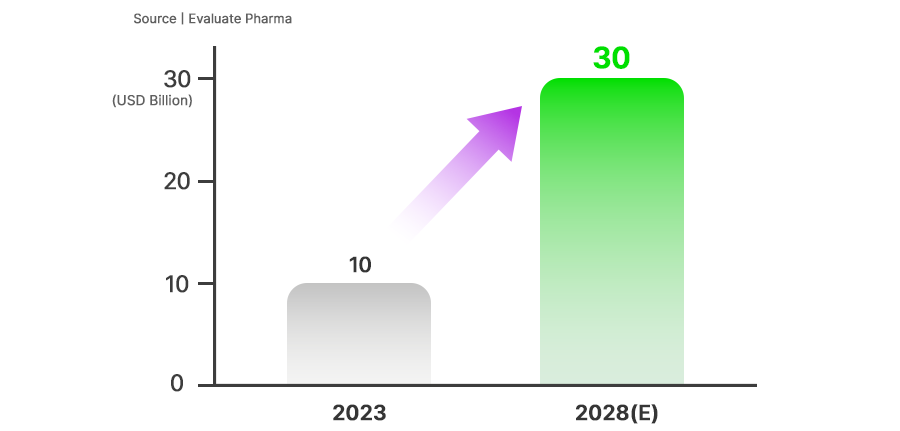
With their strong therapeutic efficacy and safety, ADCs are becoming increasingly valuable in the global pharmaceutical market. Market research firm Evaluate Pharma projects that the global market for ADC therapeutics will grow from $10 billion in 2023 to approximately $30 billion by 2028.
| Three Celltrion ADC Candidates Granted FDA Fast Track Designations in Succession
Building on its distinctive antibody R&D capabilities and cGMP manufacturing platform, Celltrion is focused on developing an ADC pipeline to deliver best-in-class therapies.
Celltrion’s lead ADC candidates incorporate next-generation camptothecin-based payloads, providing a differentiated mechanism of action that overcomes resistance associated with conventional MMAE-based microtubule inhibitors. In particular, camptothecin-based agents, which act as topoisomerase I inhibitors, are characterized by a more moderate level of cytotoxicity compared with conventional MMAE-based agents and a potent bystander effect. They are expected to reduce toxicity to healthy cells to tolerable levels while effectively eliminating tumor cells, thereby improving the therapeutic index, which reflects both efficacy and safety in cancer treatment.
Celltrion’s three lead ADC candidates, CT-P70, CT-P71, and CT-P73, have all received Investigational New Drug (IND) approval and advanced to the clinical dosing stage. Through these Fast Track designations from the U.S. FDA, Celltrion has gained recognition for its distinctive technological capabilities in the global market.
These Fast Track designations represent official recognition of the value of the candidates in Celltrion’s ADC pipeline as innovative therapies capable of addressing unmet medical needs. Celltrion plans to leverage the benefits of early and frequent communication with the FDA and Rolling Review and significantly accelerate global commercialization and patient access by pursuing Accelerated Approval and applying for Priority Review.
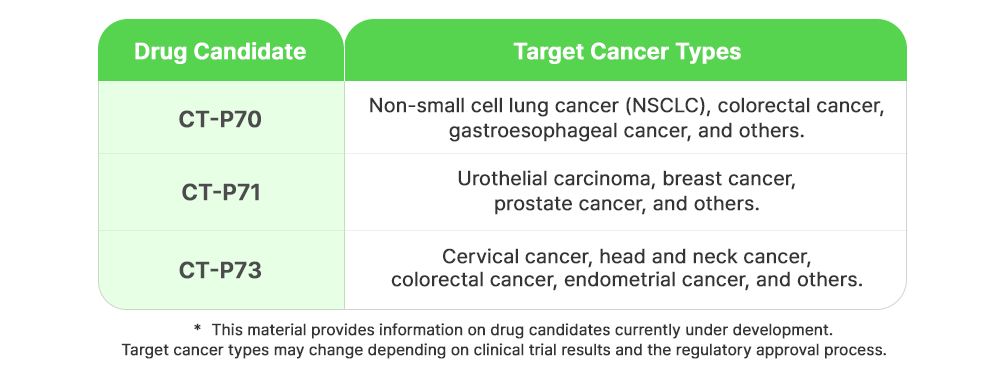
CT-P70 (cMET-targeting ADC): A candidate targeting the cMET receptor overexpressed in various solid tumors, including non-small cell lung cancer (NSCLC).
CT-P71 (Nectin-4-targeting ADC): A candidate targeting the Nectin-4 protein overexpressed in urothelial carcinoma and other major solid tumors.
- CT-P73 (TF-targeting ADC): A candidate targeting tissue factor overexpressed in multiple solid tumors, such as cervical and colorectal cancers.
Furthermore, Celltrion is accelerating the clinical development of its ADC candidates. Two of the ADC candidates are scheduled to complete part 1 of their phase 1 clinical trials by the end of this year, with topline clinical results expected to be announced sequentially starting in the first half of next year. Concurrently, preparations to enter part 2 for dose optimization are underway. CT-P70, the candidate advancing most rapidly through development, aims to enter part 2 next March, further accelerating progress toward tangible results.
| Celltrion’s ADC R&D Roadmap for Next-Generation Technologies
Celltrion is actively pursuing open innovation by proactively securing advanced linker-payload technology through its partnership with PINOTBIO and incorporating antibody optimization technology through its collaboration with Trioar. By combining these external innovative technologies with the antibody engineering capabilities it has built in-house, Celltrion plans to rapidly expand its next-generation ADC pipeline.
Conventional ADC technologies based on a single target and a single payload have been limited by the potential for reduced therapeutic efficacy when cancer cells undergo antigen alterations or develop resistance. To overcome these technical challenges and maximize therapeutic efficacy, Celltrion is accelerating the development of next-generation platform technologies, including bispecific ADCs and dual-payload ADCs.
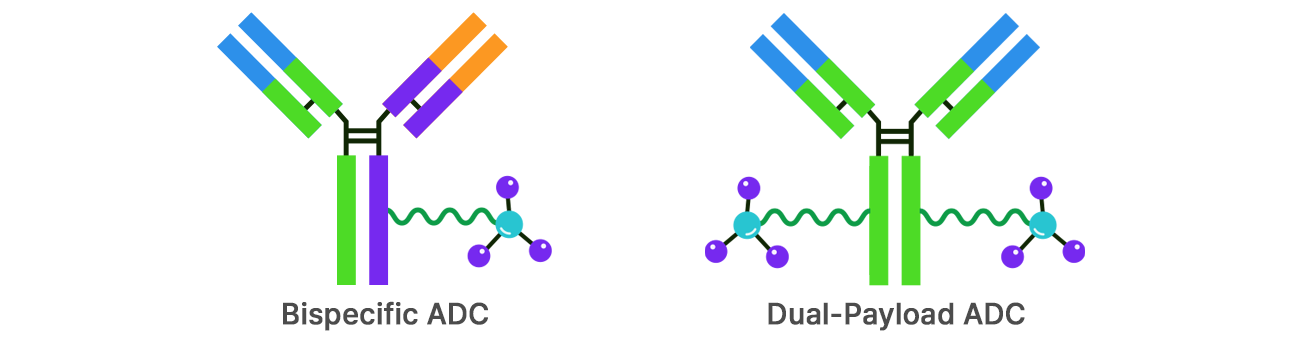
Bispecific ADC
A next-generation technology that simultaneously targets two distinct antigens on the surface of cancer cells. Unlike conventional ADCs that target a single antigen, bispecific ADCs effectively block drug evasion mechanisms arising from mutations in cancer cells. By simultaneously binding to two antigens, they maximize selectivity for cancer cells, enhance the efficiency of intracellular drug delivery, and improve therapeutic efficacy.- Dual-Payload ADC
A technology that conjugates two cytotoxic drugs with different mechanisms of action to a single antibody. For instance, it can simultaneously deliver a drug that inhibits DNA replication in cancer cells and another that disrupts microtubule-mediated cell division. This dual approach can overcome resistance that arises from long-term treatment with a single drug and extend treatment to patients with refractory cancers that have not responded to existing therapies.
Celltrion plans to sequentially advance its ADC candidates into clinical trials, aiming to submit IND applications for a total of nine ADC candidates by 2028.
Moving beyond its position as a first mover in the biosimilar market, Celltrion is evolving into a leading global biopharmaceutical company focused on developing innovative new drugs.
Building on these FDA Fast Track designations, Celltrion will accelerate clinical development and expand its next-generation ADC pipeline, including bispecific and dual-payload ADCs, to provide new treatment options for patients with refractory diseases worldwide.