Biobetters: The Next Step in the Evolution of Biologics — Celltrion’s Expanding Next-Generation Portfolio and Vision
2026.09.30
Biobetters are gaining attention across the pharmaceutical and biotechnology industry for offering significant improvements in efficacy, safety, and convenience over originator biologics. This article explores the concept of biobetters, the technologies behind them, and their growth potential in the global biologics market, highlighting how they can enhance the treatment experience for patients and healthcare professionals alike.
| What Is a Biobetter?
A biobetter is an enhanced version of an originator biologic, developed using proprietary biotechnology to improve therapeutic efficacy and patient convenience. Like biosimilars, biobetters are developed based on molecules with proven efficacy and commercial viability. However, they can offer distinct advantages over originator products, such as more convenient routes of administration, less frequent dosing, greater efficacy, or fewer side effects. Their development therefore generally requires more extensive preclinical and clinical studies than that of biosimilars.
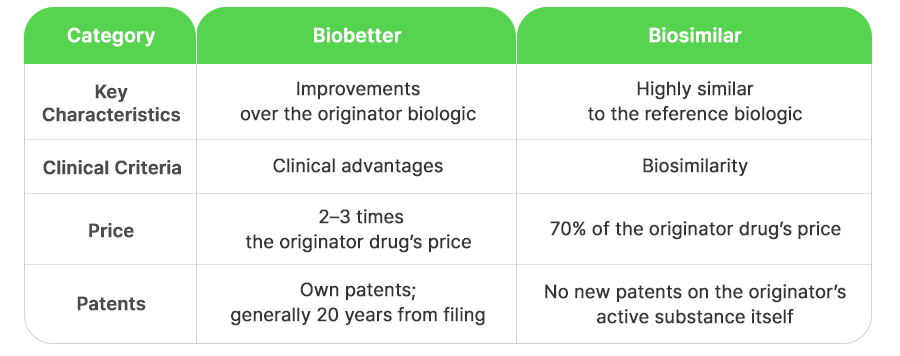
Biobetters can offer distinct clinical advantages while securing robust patent protection and data exclusivity. Building on established biologics may offer a higher likelihood of technical and commercial success than developing entirely new drugs, along with the potential for high market value and profitability.
| Key Technological Approaches in Biobetter Development
Biobetter development employs advanced biotechnology platforms, with three key technological approaches outlined below:
1. Long-Acting Technology
Long-acting technology extends a drug’s half-life in the body, reducing dosing frequency and potentially reducing drug toxicity. When administered, macromolecular biologics may trigger an immune response—a property known as immunogenicity—which can affect their efficacy or clearance from the body. Long-acting biobetters use techniques such as chemical modification and recombinant DNA technology to modify drug molecules, reducing immunogenicity and maximizing the duration of therapeutic action.
A notable example is darbepoetin alfa for the treatment of anemia. Darbepoetin alfa incorporates additional carbohydrate chains into the protein structure of epoetin alfa, an established treatment for anemia. These additional chains extend its half-life, which can substantially reduce dosing frequency from three times a week with the original drug to once a week or once every two weeks, marking a major improvement in treatment convenience for patients.
Another notable example is semaglutide for the treatment of diabetes and obesity. Some earlier GLP-1 analogs required daily administration due to their short half-lives in the body. Semaglutide was developed through chemical modification of the GLP-1 molecule and the application of long-acting technology to substantially extend its half-life, reducing dosing frequency to once a week and markedly improving treatment adherence and convenience for patients.
2. Enhanced Efficacy
This approach combines a range of advanced biotechnologies to maximize the therapeutic efficacy of existing medicines.
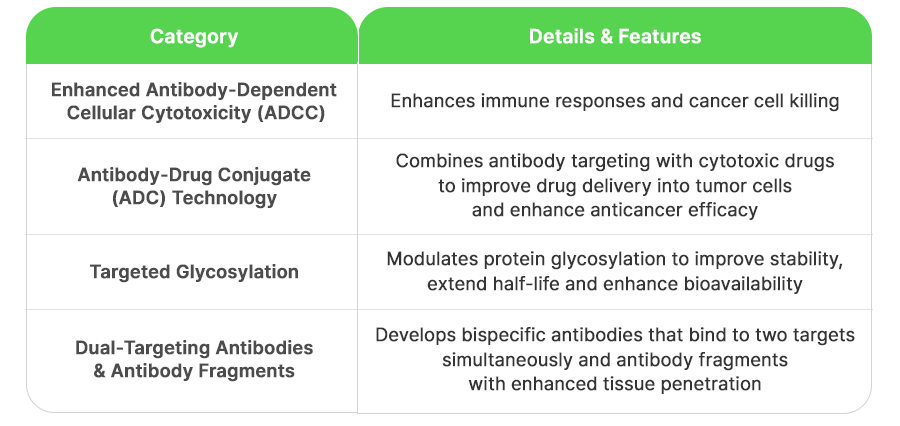
A representative example is obinutuzumab, which is used in the treatment of lymphoma and leukemia. Compared with rituximab, an established targeted anticancer therapy, obinutuzumab has a different antibody structure and an engineered glycosylation profile. These features significantly enhance antibody-dependent cellular cytotoxicity (ADCC), resulting in greater tumor cell-killing activity than existing treatments.
Another representative example is Enhertu (trastuzumab deruxtecan), an antibody-drug conjugate (ADC) that combines trastuzumab, a HER2-targeting antibody, with the cytotoxic payload DXd. It is designed to leverage trastuzumab’s ability to bind HER2 to selectively deliver the payload to tumor cells, where the released topoisomerase I inhibitor induces cancer cell death. This approach has extended therapeutic benefits to patients who may not respond adequately to conventional HER2-targeted antibody therapy alone, demonstrating how the targeting properties of an existing antibody can be used to improve drug delivery and enhance anticancer efficacy.
3. Reformulation
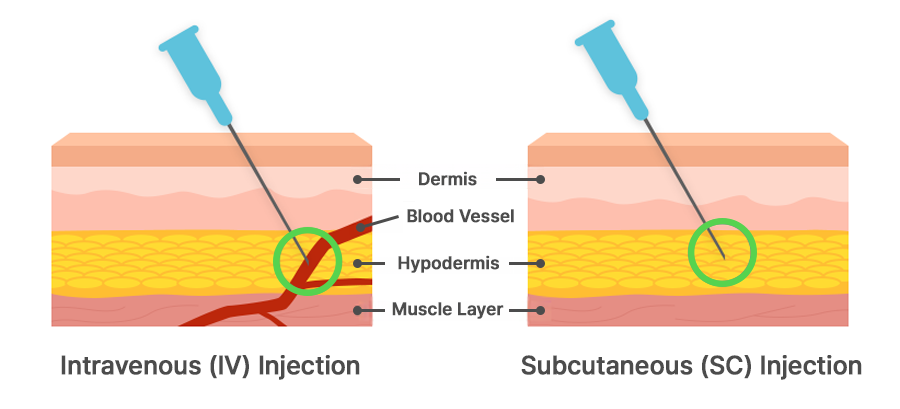
A notable example of reformulation is the conversion of an intravenous (IV) formulation, which typically requires a two- to three-hour infusion in a hospital, into a subcutaneous (SC) formulation that patients can self-administer within one to two minutes. By applying high-concentration formulation technologies and stabilization technologies that help prevent protein denaturation, this approach can significantly improve patients’ quality of life while enhancing healthcare system efficiency.
| Celltrion’s Biobetter Innovation and Future Vision
With improved efficacy and greater dosing convenience, biobetters are redefining the therapeutic value of biologics and gaining momentum in the global market. In particular, their potential to secure proprietary patent protection and generate high added value has positioned them as a key driver of competitiveness in the next-generation biopharmaceutical market.
In line with this industry trend, Celltrion has successfully developed biobetter products by converting existing intravenous formulations into subcutaneous formulations using its proprietary high-concentration formulation technology, securing marketing approvals from major regulatory authorities worldwide. This has expanded treatment options for patients by enabling self-administration, allowing them to manage their conditions more independently while significantly improving treatment convenience.
Furthermore, as ADCs emerge as a key area of biobetter development, Celltrion is accelerating both ADC development and the expansion of its ADC platform. The company is actively pursuing a ‘biobetter ADC’ open innovation strategy that combines its own proprietary antibody technologies with next-generation ADC technologies from external partners.
In particular, Celltrion’s key ADC candidates incorporate next-generation camptothecin-based topoisomerase I inhibitor payloads. These payloads offer a mechanism of action distinct from that of conventional microtubule inhibitor payloads such as MMAE, providing a potential means of addressing resistance to existing therapies and tumor heterogeneity.
Camptothecin-based payloads induce cancer cell death by inhibiting topoisomerase I, an enzyme involved in cellular DNA replication. They may also produce a bystander effect, whereby the cytotoxic activity extends to neighboring tumor cells, potentially enhancing therapeutic efficacy in solid tumors with heterogeneous target expression.
By optimizing the tumor-targeting properties of the antibody, linker stability, and payload characteristics, Celltrion aims to enhance antitumor efficacy while limiting normal tissue exposure, thereby improving the therapeutic index.
Celltrion is actively leveraging these next-generation camptothecin-based technologies through its collaboration with Pinotbio, which has strong expertise in ADC linker and payload platforms. Building on this partnership, Celltrion is conducting Phase 1 clinical trials of novel ADC candidates targeting solid tumors such as non-small cell lung cancer and bladder cancer, while continuing to evaluate their potent antitumor efficacy and favorable safety profiles.
By combining its proven antibody development capabilities with next-generation ADC platforms, Celltrion plans to introduce biobetter therapies that overcome the limitations of existing cancer treatments. We appreciate your continued interest and support as Celltrion strives to improve patients’ quality of life and shape the future of the global biopharmaceutical market.